
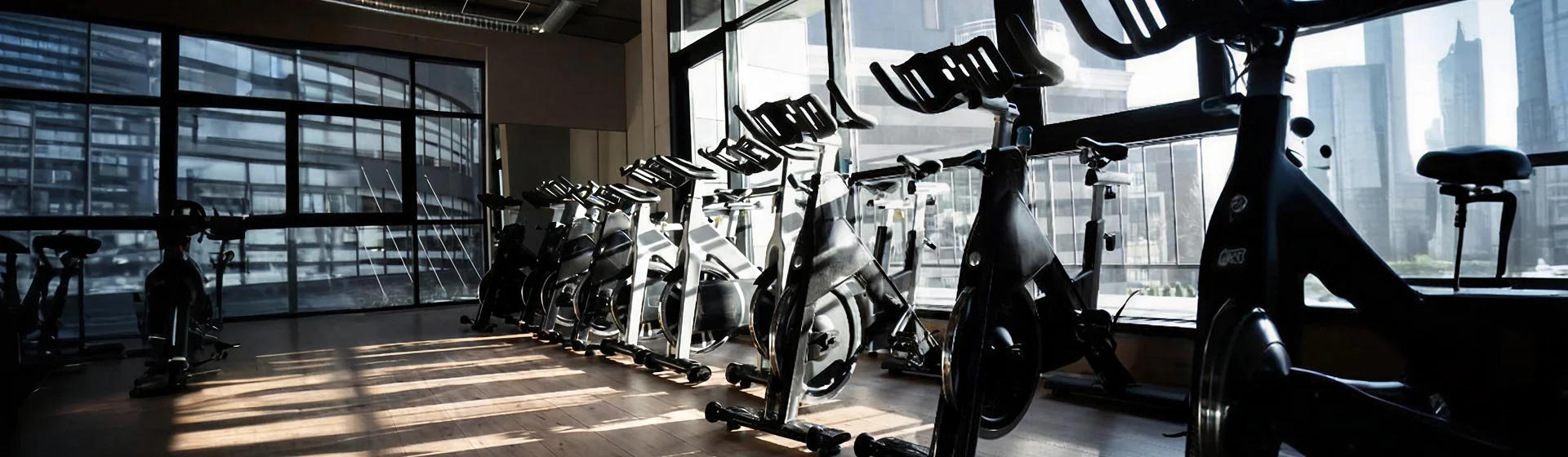
Health Club and Commercial Gym Service

On Site Fitness Service maintains health clubs and commercial gyms across Texas, with 326 recent service orders in this category. Club equipment runs more hours per week than any other setting we work in, so the failure curve is steeper and the case for scheduled maintenance is strongest.

What this work usually looks like

A club machine can log more hours in a month than a home machine does in a year. Belts, decks, bearings and cables all wear on a schedule you can predict, which means most club breakdowns are preventable and most of the expensive ones are the result of a small fault left alone.

Members notice out-of-order signs faster than management does, and a row of them is a retention problem before it is a maintenance problem. We work to keep machines available rather than simply to fix them once they stop.

Equipment and brands we service

Clubs run the widest equipment mix we see: treadmills, ellipticals, steppers, upright and recumbent bikes, rowers, full selectorized circuits, plate-loaded and functional rigs. We service all major commercial lines and install OEM parts wherever the manufacturer supplies them.

On Site Fitness Service has worked across Texas since 2007 and has completed more than 30,000 service calls in over 300 Texas cities. Our technicians are factory trained, so warranty labor is handled alongside ordinary repairs. Brands include Nautilus, Cybex, Technogym, Woodway, Octane, True Fitness, Hoist Fitness, FreeMotion, Inflight Fitness, Vision Fitness, Spirit Fitness, Concept2, Body Solid, Batca, SportsArt, SciFit, Icon, Echelon, Precor, Life Fitness, Matrix, Johnson Health Tech, Core Health & Fitness, StairMaster and Star Trac, among many others — this is a sample of the lines we see most, not the limit of what we service, so ask about anything not named here.

Preventive maintenance for health clubs & commercial gyms

For clubs the maintenance question is availability, not cost. Platinum takes every machine through its own checklist; Gold adds deck waxing and internal cleaning to the Silver inspection round. Pricing follows your cardio and strength counts, and busy floors usually justify a shorter interval.

  • SilverInspect decks, belts, elevation systems, cables, pulleys, pins and frames for wear; adjust belts; lubricate visible pivot points and guide rods; keypad function tests; calibrate and test every unit for safe operation. No cleaning or waxing at this level.
  • GoldEverything in Silver, plus internal cleaning and vacuuming, treadmill deck waxing and upholstery cleaning — and fuller lubrication covering elevation systems, chains, gears, bushings and seat slides.
  • PlatinumA per-machine checklist by equipment type, adding exterior cleaning — hoods, frames, covers, chrome and flywheels — plus electrical and diagnostic checks: motor brushes, amp draw, error codes and usage hours.

See our maintenance programs or call 800-730-5802. Torn or tired pads can be recovered and reinstalled rather than replaced.

Why maintenance matters

Commercial fitness equipment is built to a published standard. ASTM F2276, the standard specification for fitness equipment, sets design and construction requirements for commercial machines and requires manufacturers to supply maintenance instructions alongside assembly and operating documentation. Those instructions are the baseline a maintenance plan is built on, and they are also what a manufacturer will point to if a warranty claim is questioned.

Equipment failures are not only a cost problem. The U.S. Consumer Product Safety Commission tracks emergency-department visits involving consumer products, including exercise equipment, through its National Electronic Injury Surveillance System, which is the federal source facilities and insurers reference on this subject. A frayed cable, a slipping belt or a worn deck is a safety issue before it is a repair bill.

The industry has written standards for exactly this. ACSM’s Health/Fitness Facility Standards and Guidelines, now in its fifth edition, covers facility equipment and operating procedures, and its appendices supply sample preventive maintenance schedules and checklists — the governing body of the field treats scheduled maintenance as part of running a club properly, not as an optional extra. ASTM F1749 sets the companion specification for safety signage and labels on equipment and in the facility. Together they describe what a well-run club is expected to be doing, and that is also the yardstick applied afterwards: when a member is hurt by a machine that failed, the questions are whether it was inspected, whether it was maintained, and whether there is a written record proving it.

That is the practical case for a scheduled plan over reactive repair: it follows the manufacturer’s own maintenance schedule, it produces a written record of what was inspected and when, and it catches wear while it is still an adjustment rather than a replacement.

Where we do this work

We service health clubs & commercial gyms across Texas, most heavily in the Dallas-Fort Worth, Houston, Austin and San Antonio metros but well beyond them too. See our Texas service areas for local detail, or call 800-730-5802.

Health Clubs & Commercial Gyms FAQs

How quickly can you get a club machine back in service?

That usually depends on the part. Nobody in this industry stocks parts for every machine, so most repairs are not finished on the first visit — what the first visit does is identify the exact part, so it is ordered once rather than guessed at and we return to install it. Getting a technician out early is what shortens the whole timeline.

Do you service every machine on a club floor or just cardio?

Both. We work across cardio, selectorized strength, plate-loaded and functional equipment, and a Platinum plan covers each machine individually.

Can you work outside opening hours?

We schedule around your floor where we can. Tell us your quiet window when you book and we will work to it.

Can you keep a whole floor of equipment on one maintenance schedule?

Yes, and it is the usual arrangement for a club. Plans are priced on the number of cardio and strength pieces on the floor, and the interval is set by how hard the room is used rather than by the calendar. A club floor generally needs more frequent attention than any other facility type we serve.

Which equipment on a club floor needs inspecting most closely?

Strength equipment and stair climbers, because they give no warning. A selectorized machine works exactly as well the day before a cable fails as it did a year earlier, and stair climber cables and springs carry a member's full body weight. Cardio equipment usually tells you something is wrong through noise or feel first.